Localize Your Website into Tagalog
Reach tens of millions of Tagalog speakers in the Philippines, plus one of the largest and most digitally active Filipino diaspora communities in the US and the Gulf. Filipino, the Philippines' national language, is essentially a standardized form of Tagalog, and the two names are often used interchangeably in practice. MotaWord translates into the language your audience actually reads day to day.




Tagalog at a Glance
- 80m+ Tagalog and Filipino speakers combined.
- 1.7m+ speakers In The US, The 4th most-spoken non-english language at home.
- 2 official languages of The Philippines, Filipino and English.

A large, English-fluent, digitally engaged market and diaspora
The Philippines combines a large domestic market with one of the world's largest overseas worker populations, both meaningfully online.
Over $470 Billion
Over $470 Billion GDP of the Philippines.
High social media use
Social media and mobile internet usage in the Philippines.
Millions of OFWs
Of Overseas Filipino Workers across the Gulf states, sending significant remittances home.
Bilingual market
Market where English and Filipino content often need to coexist.
Two names, one closely related language
In practice, most people use the terms interchangeably, but there's a real distinction worth understanding for content decisions.
Tagalog
The native language of Central Luzon and Metro Manila, and the base from which Filipino was standardized.
Filipino
The Philippines’ official national language, a standardized form of Tagalog with loanwords from other Philippine languages, English, and Spanish. Generally the better default for national commercial content.
Cultural and linguistic considerations
Tagalog localization mistakes usually come from ignoring how much English naturally mixes into everyday Filipino communication.
-
Taglish is a real, normal register
Code-switching between English and Filipino is standard in Philippine media and casual communication. Purist, English-free Filipino can feel stiff for some content types. -
The Philippines is linguistically diverse beyond Tagalog
Cebuano and other regional languages have large speaker bases outside Luzon. Filipino still works as a broadly understood lingua franca for most commercial content. -
English often needs to sit alongside Filipino, not replace it
Given the country's high English fluency, many successful Philippine-facing sites run bilingual rather than fully replacing English content.
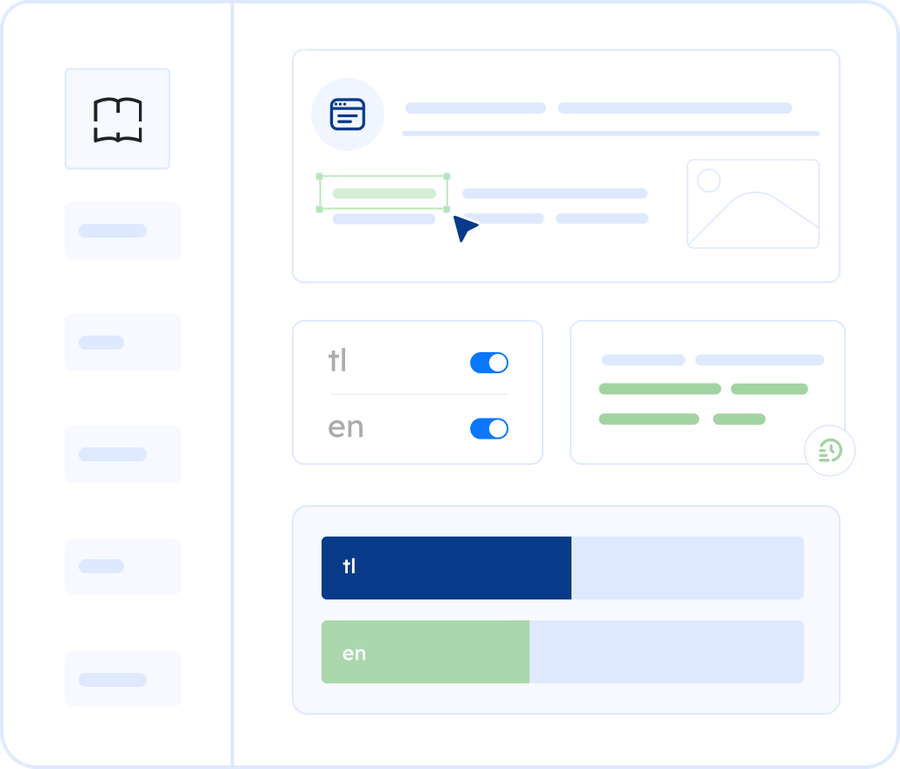
What Tagalog localization does for search and reach
Standard SEO tooling applies, with the bilingual nature of Philippine search behavior as the main strategic consideration.
- Bilingual keyword research: Filipino audiences frequently search in English, Filipino, or a mix of both, so keyword strategy needs to account for all three patterns.
- Hreflang: fil-PH or tl-PH are both used in practice for Filipino and Tagalog content targeting the Philippines.
- Google is the standard search engine: No special search engine considerations; standard technical SEO and Search Console practices apply directly.


The MotaWord Difference
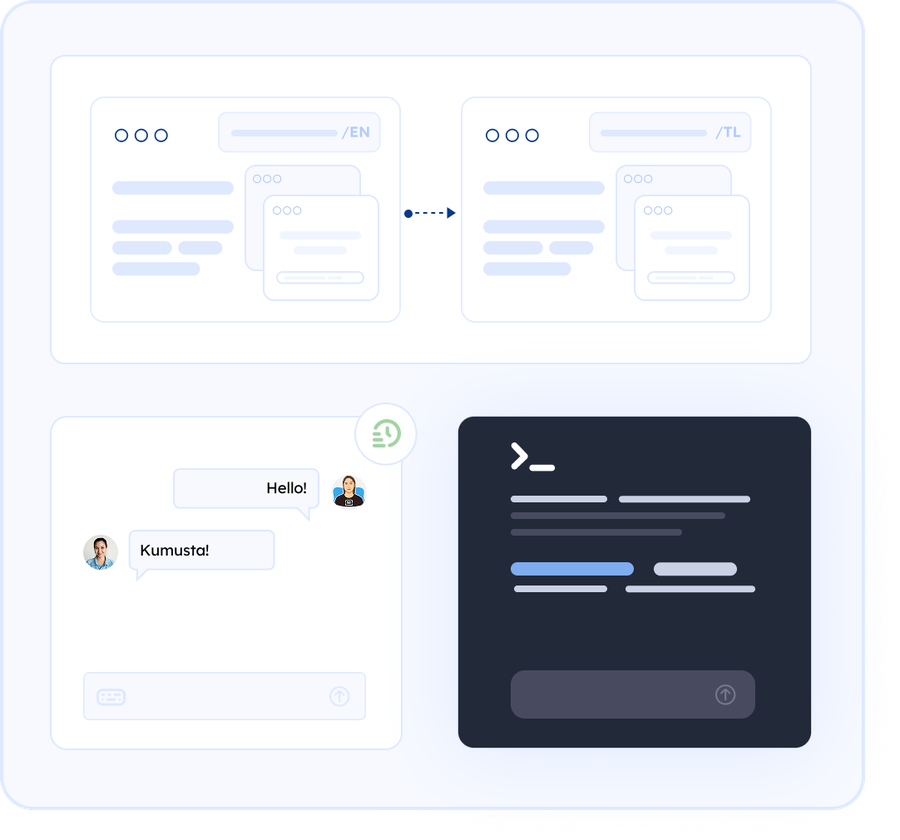
Native Filipino linguists
Translators fluent in modern Filipino usage, including natural Taglish register where appropriate.
MotaWord Active
AI makes your website multilingual instantly. Discounted professional translation is available as an optional add-on when you want human review on the pages that matter most.
Fast Professional Proofreading Turnaround
Our collaborative translation model gets full-site projects done in hours, not the weeks a traditional agency needs.
24/7 live support
Direct access to your project team throughout, with no ticket queue.
Need Tagalog beyond your website?
MotaWord supports Tagalog beyond website localization, from official document translation to live interpretation.
- Certified Tagalog translation: Live on site. USCIS-accepted certified translation for birth certificates, diplomas, transcripts, and other official Tagalog documents. View certified translation →
- On-site Tagalog interpretation: In-person interpreters for legal proceedings, medical appointments, school meetings, and business events. on-site interpretation services
- Video and phone Tagalog interpretation: On-demand VRI and OPI interpreters for remote Tagalog-language support, available 24/7. on-site vs VRI vs OPI interpretation
Translating and localizing a website into Tagalog
Not sure where to start?
Tell us about your site in the chat. Answer one quick question and we'll point you to the right next step.
Filipino is generally the better choice for national commercial content, since it's the standardized, officially recognized form most Filipinos read regardless of their home region.
Depends on your content and audience, but some natural code-switching often reads as more authentic than a strictly English-free translation.
The cost of translating a website with MotaWord depends on the workflow you choose. For file-based website localization, you send us the text, pages, or strings you want translated, and pricing is based mainly on word count and project scope. If you want a more complete website workflow, MotaWord Active runs on a subscription matched to your site. Active makes your website multilingual instantly with AI, includes multilingual SEO support, ongoing content updates, a no-code workflow, and 24/7 live support. If you want human review, discounted professional translation is available as an optional add-on.
With MotaWord Active, your website can be localized into Tagalog in minutes. Full-site professional translation projects are done in hours, not the weeks a traditional agency needs.
Yes. MotaWord Active makes your website multilingual instantly, and discounted professional translation is available as an optional add-on when you want human review on the pages that matter most.
No. MotaWord Active translates your site without any coding, and we also offer plugins and integrations for platforms such as WordPress and Drupal. See how MotaWord Active works.