Localize Your Website into German
Reach 130 million native German speakers across six countries with a website that reads like it was written in German, not translated into it. Whether you need to translate your website into German for the first time or localize an existing one for Germany, Austria, and Switzerland separately, MotaWord pairs native DACH linguists with SEO-aware workflows built for German's compound-word structure.

German at a Glance
- 130m+ Native speakers.
- 6 countries, Official status.
- #1 Native Language In The EU.

A market too large to leave in English
Germany alone is the largest economy in Europe, and German-speaking buyers consistently prefer to browse and purchase in their own language.
$4.3 Trillion GDP
Combined GDP of Germany, Austria and Switzerland.
76% Prefer Local
Of online shoppers say they rarely buy from English-only sites.
3rd Online Language
Most used language on the internet by content volume.
92 Million Users
Internet users across the DACH region.
German-speaking markets, by reach
German is not one homogeneous market. Standard German splits into three written varieties, and the right one depends on where your buyers are.
Belgium Official ~0.08M native
Co-official in the German-speaking Community, East Cantons
- Germany: Official, ~75M native. Largest market, sets the de facto written standard
- Austria: Official, ~8.9M native. Austrian Standard German, distinct food, admin and legal vocabulary
- Switzerland: Official, ~5.5M native. Swiss Standard German in writing, no ß, different legal and business terms
- South Tyrol, Italy: Co-official region, ~0.32M native. Co-official at the provincial level, follows German Standard conventions
- Luxembourg: Official, ~0.4M native. Co-official with French and Luxembourgish
Cultural and linguistic considerations
German localization mistakes rarely come from mistranslated words. They come from ignoring formality, regional identity, or legal expectations baked into German-language web content.
- Sie vs. du: Formal "Sie" is the default for business and e-commerce sites. Switching to informal "du" without a clear brand reason such as youth, fitness, or gaming can read as unprofessional or presumptuous.
- Don't flatten Austria and Switzerland into "German": Treating Austrian and Swiss visitors as an afterthought of the German market is a common and noticeable misstep. Vocabulary, currency, and legal disclosures differ by market.
- Compound words break rigid UI: German compounds run long. Rechtsschutzversicherungsgesellschaften is a real word. Buttons, nav menus, and mobile layouts built for English text often need to be resized, not just relabeled.
- Impressum and legal disclosures: German law requires a detailed Impressum with the site owner, address, contact information, and registration details on commercial websites. Its absence is a visible red flag to German visitors, not just a legal risk.
- Directness reads as professionalism, not rudeness: Marketing copy that leans on hype, superlatives, or soft hedging tends to underperform. German audiences generally respond better to precise, substantiated claims.
- Formats and units: Comma as decimal separator, period as thousands separator, DD.MM.YYYY dates, and metric units throughout. Getting these wrong undermines trust fast.


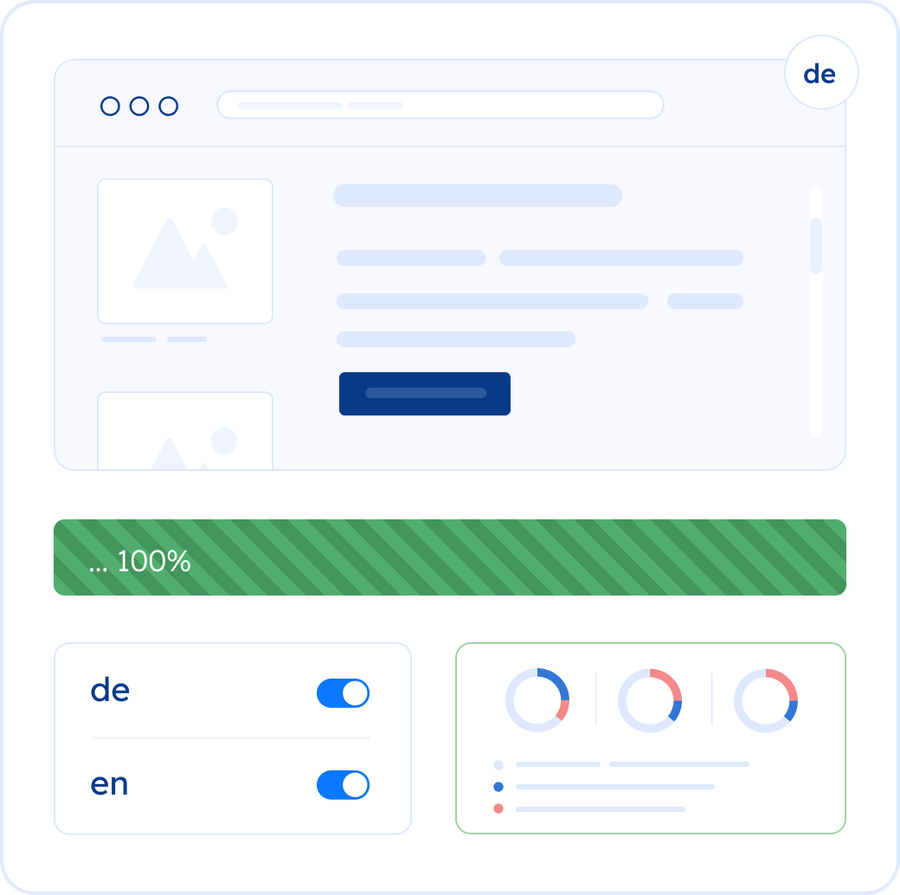
What German localization does for search and reach
A German version of your site is not just readable, it becomes independently discoverable in a market Google and Bing rank separately from your English site.

Hreflang by market
De-DE, de-AT and de-CH can rank differently for the same query. Proper hreflang tagging tells search engines which version to serve where.

Compound keyword research
German search behavior often uses long compound nouns rather than English-style short-tail phrases. Keyword strategy has to be built in German, not translated from English keyword lists.

Domain and URL strategy
CcTLD (.de/.at/.ch), subdirectory, or subdomain each carry different local-ranking signals. We flag this early since it shapes the whole project.

Character encoding
Ä, Ö, Ü and ß need to render correctly in URLs, meta tags, and page titles. Broken umlaut encoding is a common and avoidable source of lost rankings.
What sets our German localization apart

Native DACH linguists
Translators matched to Germany, Austria or Switzerland specifically, not a single generic "German" pool.

Proprietary website plugins
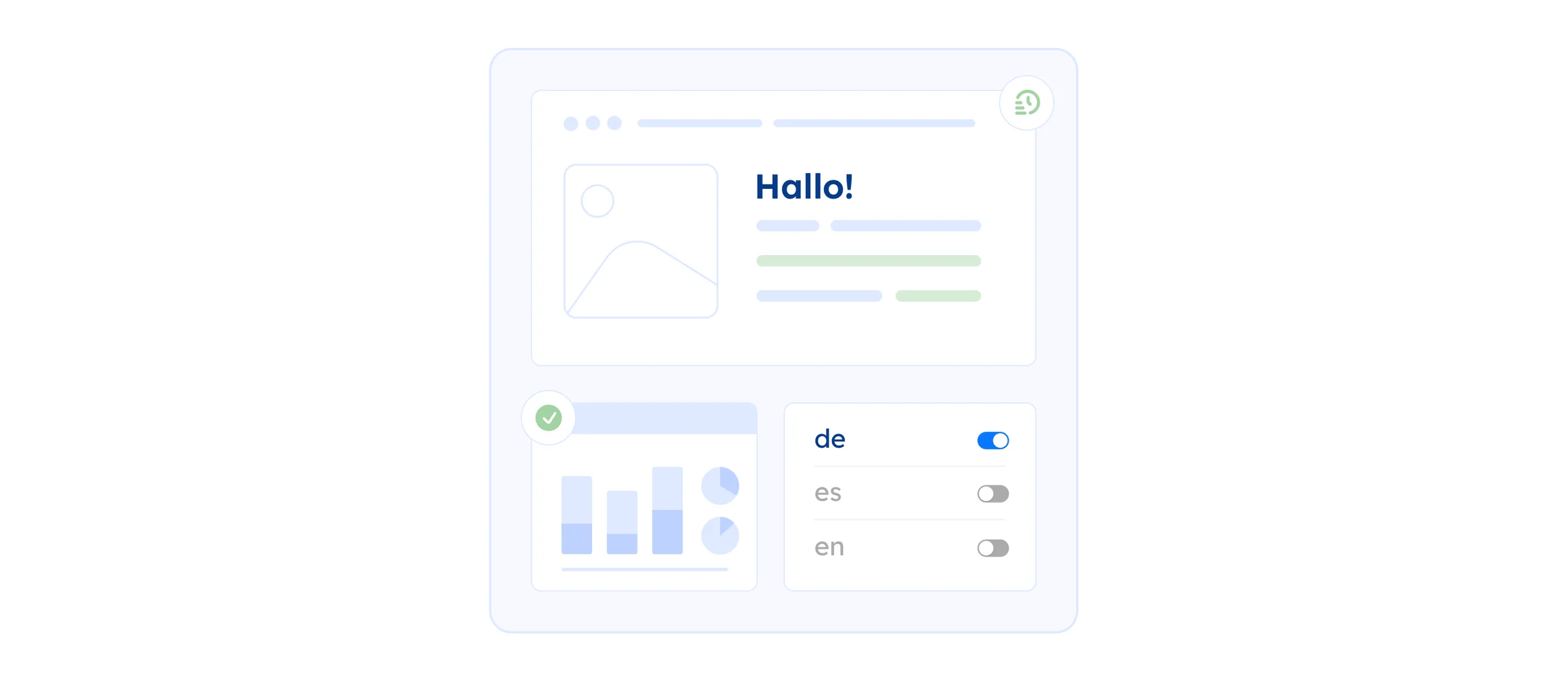
WordPress and Drupal integrations detect and sync new content automatically, so your German site never falls behind the English one.

MotaWord Active
AI makes your website multilingual instantly. Discounted professional translation is available as an optional add-on when you want human review on the pages that matter most.

Fast Professional Proofreading Turnaround
Our collaborative translation model keeps full-site projects moving much faster than the weeks a traditional agency needs.

DTP for text expansion
German text typically runs 20 to 35% longer than English. Our DTP team adjusts layouts so nothing gets clipped or overlapped.

24/7 live support
Direct access to your project team throughout, with no ticket queue.
Need German beyond your website?
MotaWord supports German across the full customer journey, from official document translation to live interpretation.
- Certified German translation: Live on site. USCIS-accepted certified translation for birth certificates, diplomas, transcripts, and other official German documents. See our certified German translation services.
- On-site German interpretation: Live on site. In-person interpreters for legal proceedings, medical appointments, school meetings, and business events. See our on-site interpretation services.
- Video and phone German interpretation: Live on site. On-demand video remote interpretation and over-the-phone interpreters for remote German-language support, available 24/7 in every time zone. See our video remote interpretation services.
Translating and localizing a website into German
Not sure where to start?
Tell us about your site in the chat. Answer one quick question and we'll point you to the right next step.
The cost of translating a website with MotaWord depends on the workflow you choose. For file-based website localization, you send us the text, pages, or strings you want translated, and pricing is based mainly on word count, starting at $0.09 per word. If you want a more complete website workflow, MotaWord Active runs on a subscription from $49.99 per month, with a 14-day free trial. Active makes your website multilingual instantly with AI, includes multilingual SEO support, ongoing content updates, a no-code workflow, and 24/7 live support. If you want human review, discounted professional translation is available as an optional add-on. See all MotaWord Active plans.
Most sites move through localization quickly with MotaWord's collaborative workflow. Professional proofreading turnaround depends on the length and complexity of the content, but it is typically much faster than the timelines you would expect from a traditional agency.
Not always, but for e-commerce, legal, or medical content it's strongly recommended. Vocabulary, currency, and disclosure requirements differ enough to affect conversion and compliance.
Translation renders your existing text in German. Localization goes further: adapting formality, formats, legal disclosures, layout, and SEO structure so the site functions like a native German site, not a translated English one.
Yes. MotaWord Active makes your website multilingual instantly, and discounted professional translation is available as an optional add-on when you want human review on the pages that matter most.
No. MotaWord Active translates your site without any coding, and we also offer plugins and integrations for platforms such as WordPress and Drupal. See how MotaWord Active works.